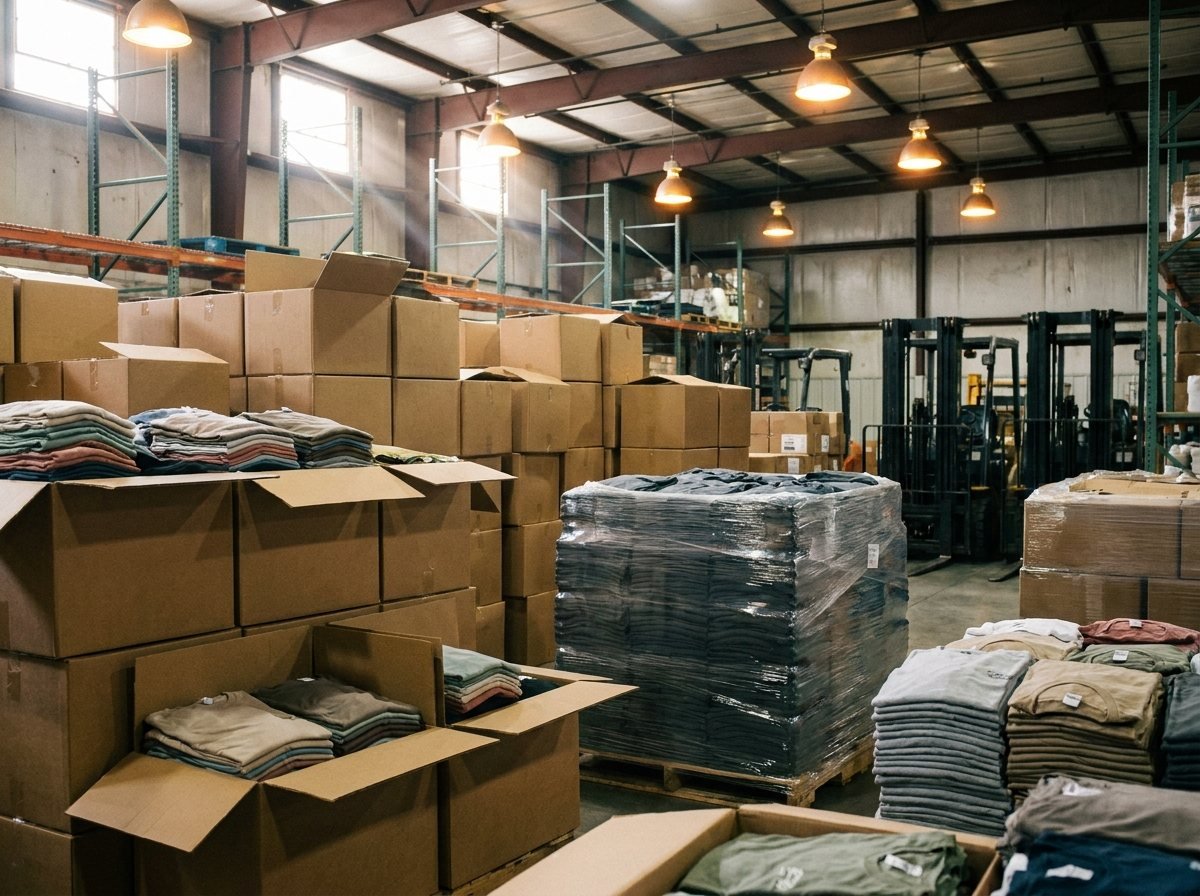
Before decoration method even enters the conversation, the blank shirt itself has more variation than most people realize — and the terminology shops use to describe it isn't always explained.
Ringspun vs. open-end cotton
Ringspun cotton fibers are twisted more tightly during manufacturing, producing a softer, smoother fabric with a finer weave. Open-end cotton is cheaper to produce and feels rougher and thicker by comparison. Most premium blanks are ringspun; most bulk basic tees are open-end.
Tri-blend fabric
A mix of cotton, polyester, and rayon, tri-blend fabric is prized for an especially soft, slightly heathered look and a more fitted drape. It costs more than basic cotton and tends to print slightly differently (colors can look a bit more muted on DTG/DTF due to the poly content), which is worth flagging to the shop before printing a tri-blend blank.
GSM (grams per square meter) is the real weight indicator
"Heavyweight" and "lightweight" are marketing terms; GSM is the actual number. Roughly 120-140 GSM is a lightweight, drapey tee; 180-200 GSM is a standard mid-weight; 220+ GSM starts feeling like a heavyweight, structured shirt. Higher GSM generally also holds up better to repeated screen printing without show-through.
Why this matters for your order
Two shops quoting the "same" t-shirt at different prices are very often quoting different blank tiers, not just different labor costs. Asking for the specific blank brand and style number (not just "premium cotton tee") lets you compare apples to apples, and lets you look the exact blank up yourself if you want to verify.